
Mud

This is post 3 of 3 in the series “The Cabinet Project”

In the massive labyrinth of science buildings and libraries here at U of T there are dozens of empty and underused display cabinets. The Cabinet Project, which ended on May 15, aimed to give these display cases new life. For five-and-a-half weeks, 12 local and international artists turned 10 cabinets located throughout St. George campus into mini-exhibits exploring the interaction between art and science. All the installations used objects that were either created in local science labs or belong to the University of Toronto Scientific Instruments Collection. The displays ranged from sculptures containing soil samples teeming with microbial life to an exhibit that took advantage of motion parallax effects to create an apparent amplification of movement. The Cabinet Project was organized by the ArtSci Salon, which describes itself as “a group of artists, scientists and art-sci-tech enthusiasts”.

We went out to experience these exhibits for ourselves. Below are some of our impressions, photos, and interviews with the creators who made this project happen.

  1. Seeing the Invisible: The First North American Electron Microscope
  2. Dust Counters and Gas Collectors
  3. Mud
Written by Louis Ho

Nicole Clousten is a practice-based researcher at York University and an artist at the Coalesce BioArt Lab at the University of Buffalo. Her cabinet, Mud, is an ominous display acrylic prisms that house mud collected from the Lake Ontario shoreline. After being exposed to light, the slabs became enriched with a teeming community of microbial life.
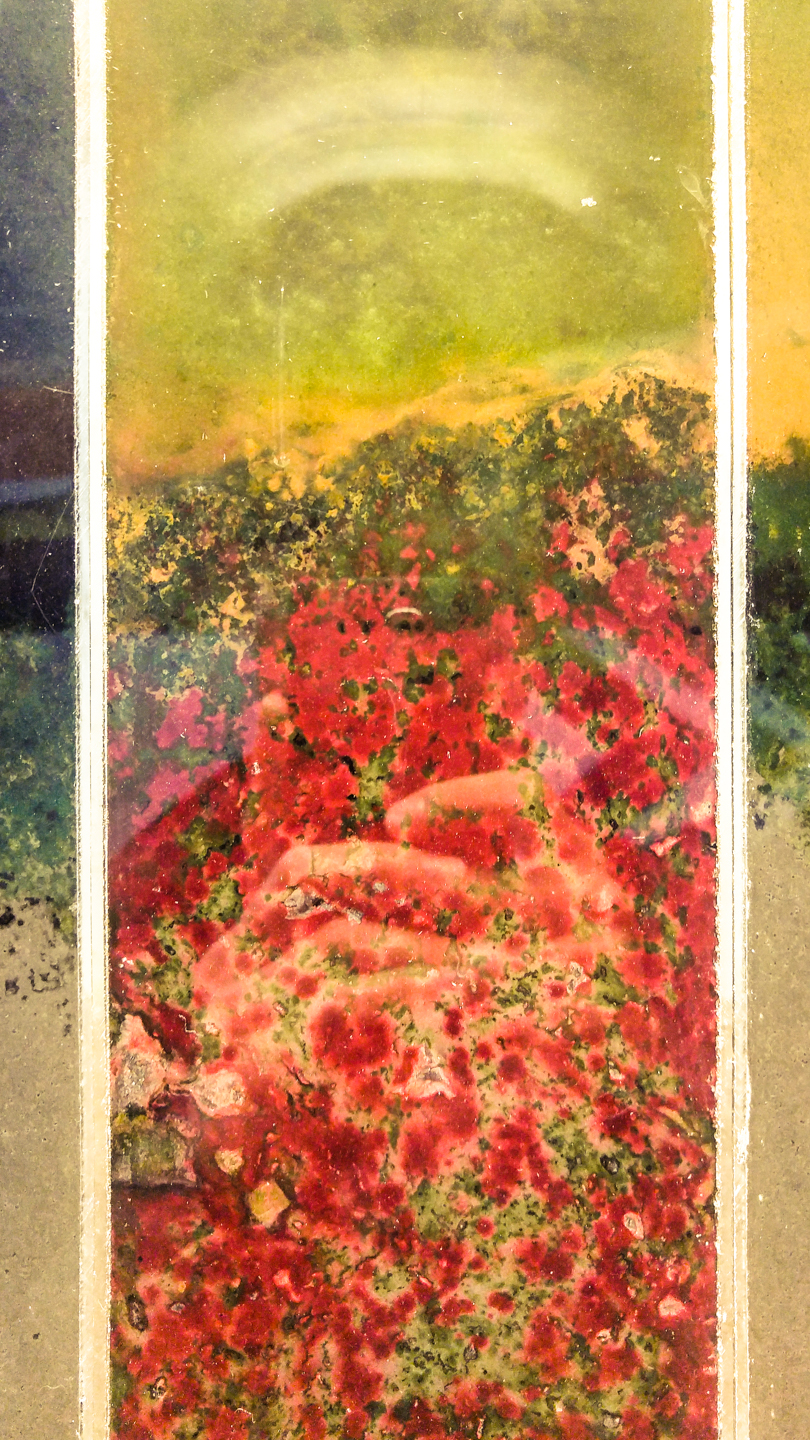
 

Clousten’s had a “strong desire to engage microbial life” depicting the “complex communities that feed us, protect us from pathogens, produce vitamins and more that we have yet to understand”. Face-to-face with this microbial soup, a casual observer may be grossed out, repulsed even. But a closer look reveals intricate morphological details that start to emerge.

Bright colours that contrast the dark background.

Mud forces us to directly confront microbial life and their significance in our lives. As
Clousten added, ‘Recognizing the enmeshed nature of our bodies may push us to foster stronger, most sustainable, and empathetic relationship with our ecosystem as a whole’. It is no surprise that they play such a crucial role in our present lives and in our evolutionary past. As our knowledge of microbial life grows, it directly forces us to consider the intimate relationship that microbes have in our lives.


Leave a Reply

Your email address will not be published. Required fields are marked *